Quick answer.
Semaglutide and tirzepatide are once-weekly injections, so fasting does not interrupt the dose. The IDF-DAR guidelines state that subcutaneous injections do not break the Ramadan fast and that GLP-1 medications need no dose change once titration is complete. The main risks are nausea and dehydration during long fasts, not low blood sugar — unless you also take insulin or a sulfonylurea. Start or step up your dose at least four weeks before Ramadan, not during it.
The guidance clinicians work from is the Diabetes and Ramadan Practical Guidelines 2021 from the International Diabetes Federation and the Diabetes and Ramadan International Alliance, and a 2023 narrative review in the Journal of Obesity that pulls together the GLP-1 trials run during Ramadan. Both are written for diabetes care, which matters — there is very little research on GLP-1s in people fasting for weight loss alone. If you have not chosen a medication yet, the GLP-1 cost calculator is a place to start.
Ramadan 2027 begins in early February. If you started a GLP-1 this autumn, you will reach the month on a steady dose with a few months of experience behind you — which is the best position to be in. If you are thinking about starting in January, the timing question matters more than the medication question.
This is a practical guide for Muslims on semaglutide or tirzepatide, or considering one: whether you can fast, whether the injection affects the fast, what the ingredients are, when in the week to inject, what to eat at iftar, and who should not be fasting on a GLP-1 at all. It is written for men and women. It does not issue religious rulings; it tells you what the clinical guidance says and what the labels say, so that the conversation with your scholar and your clinician starts from facts.
A note on the evidence. Almost everything studied about GLP-1s and Ramadan was studied in people with type 2 diabetes. The findings mostly carry over, but the honest position is that fasting on a GLP-1 for weight loss alone has not been formally studied, and the advice below is built from the diabetes guidance plus the medication labels.
Can you take semaglutide or tirzepatide while fasting?
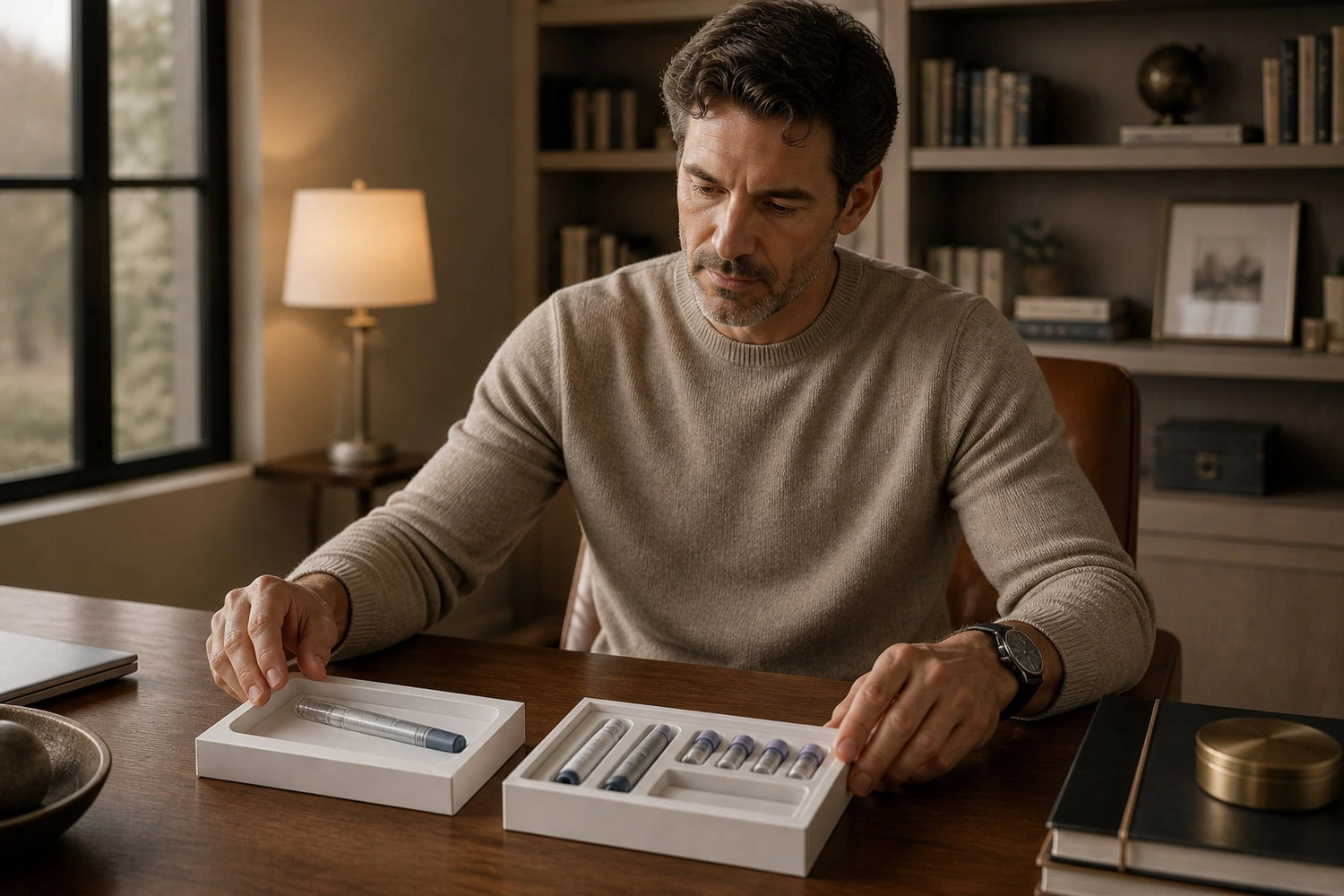
Yes, for most people. Both medications are injected once a week, under the skin, and work for the full week regardless of when or whether you eat. Fasting from dawn to sunset does not interrupt the dose, and the dose does not need to move around meals the way a daily tablet would.
The IDF-DAR 2021 guidelines, which are the reference most clinicians use for fasting patients, list GLP-1 receptor agonists as needing no dose modification during Ramadan once appropriate titration has been achieved. The reasoning is that GLP-1s lower blood sugar in a glucose-dependent way — they do less when sugar is already low — so on their own they carry a low risk of hypoglycemia during a fast. The guidelines also say not to stop the medication for Ramadan without consulting a clinician.
The qualifier is "once titration has been achieved." The weeks after starting or increasing a dose are when nausea and vomiting peak, and that is a poor time to also be going thirteen hours without water. The 2023 review of GLP-1 trials during Ramadan recommends that any dose titration begin at least four weeks before the month starts.
Does the injection break the fast?
The IDF-DAR guidelines state plainly that the administration of insulin by subcutaneous, intramuscular, or intravenous routes does not break the Ramadan fast. GLP-1 injections are given the same way — under the skin, with no nutritional content — and clinical guidance treats them the same. That position reflects the view of the religious scholars who contributed to the guidelines, which were developed jointly by clinicians and Islamic scholars.
Rulings vary between schools and between individual scholars, and some people prefer to remove the question entirely by injecting after iftar. If your scholar's view differs, follow it; the once-weekly schedule makes it easy to place the injection outside fasting hours without any clinical cost.
Is semaglutide halal? What the label says about ingredients
This is a question for a scholar, not a telehealth company. What a telehealth company can do is tell you what is in the product, from the label, so the question is answered with facts.
Semaglutide is a synthetic peptide. The FDA label for Wegovy states that the peptide backbone is produced by yeast fermentation — a recombinant process in which yeast cells make the protein chain — and that it is then chemically modified. The inactive ingredients in the branded injection are disodium phosphate dihydrate, sodium chloride, and water for injection. No animal-derived ingredient and no gelatin is listed. Tirzepatide is likewise a synthetic peptide. Zepbound's single-dose pen and vial list sodium chloride, sodium phosphate, and water; its multi-dose vial and KwikPen add benzyl alcohol, glycerin, and phenol as preservatives. Benzyl alcohol is a preservative, not the ethanol in drink, but whether that distinction matters is something scholars answer differently — which is exactly why the ingredient list, not a summary of it, is what to bring to yours.
Compounded versions are a separate question. A compounding pharmacy makes its own formulation, and multi-dose vials of either medication commonly contain a preservative such as benzyl alcohol. Ask the pharmacy for the full ingredient list of the specific product you receive. Many scholars take the position that a medication with no animal-derived ingredients, taken by injection for a genuine health need, is permissible — but that is their ruling to give, and the ingredient list is what they will want to see.
Timing the weekly dose around Ramadan
The labels allow the injection at any time of day, with or without food. During Ramadan, most people land on one of two patterns. The first is to inject after iftar on a chosen evening, so the first hours — when any nausea is most likely — fall after the fast is broken and before sleep. The second is to inject just before suhoor, which some people find keeps appetite down through the day. Both are fine. Pick one, keep the same day each week, and do not move the injection day around to chase a better feeling; that is the one thing the label asks you not to do without keeping at least two days between doses.
What not to do is start a new medication or step up a dose in the first week of Ramadan. If you and your clinician are planning an escalation, do it in January or wait until Eid.
Low blood sugar: who is actually at risk
On a GLP-1 alone, the risk is low. The medication reduces blood sugar when it is high and does much less when it is already low, which is why the guidelines do not call for dose changes. The trials of GLP-1s during Ramadan, mostly in people with type 2 diabetes, consistently found fewer hypoglycemic episodes on a GLP-1 than on a sulfonylurea.
The risk changes if you also take insulin, a sulfonylurea, or another diabetes medication that lowers sugar regardless of where it is. Those combinations are where the IDF-DAR risk categories apply, and some people in the higher-risk categories are advised not to fast at all. If you have diabetes and are on more than a GLP-1, this is a conversation with your prescriber before Ramadan, not during it. If you are on a GLP-1 for weight alone and have no diabetes medication, hypoglycemia is not the thing to worry about. Dehydration is.
Find out if this is right for you.
The Maro intake takes about five minutes. A licensed physician reviews your case before any prescription is issued — no rubber stamps.
Start My Free VisitNausea, dehydration, and the long fast
Nausea is the most common side effect of both medications, and vomiting is not rare in the early months. In Ramadan, vomiting during the day costs you fluid you cannot replace until sunset. That is the practical hazard, and it is why the "no new doses during Ramadan" rule exists.
Between iftar and suhoor, drink more water than feels necessary — small amounts, steadily, rather than a litre at once. Skip fizzy drinks and very sweet drinks, which add gas and sugar on an empty stomach. If you are vomiting, unable to keep fluids down, dizzy, or unusually confused or fatigued, break the fast and seek care; the clinical guidance treats that as needing prompt attention, and the religious exemption for illness exists for exactly this reason.
Iftar on a GLP-1: how to break the fast
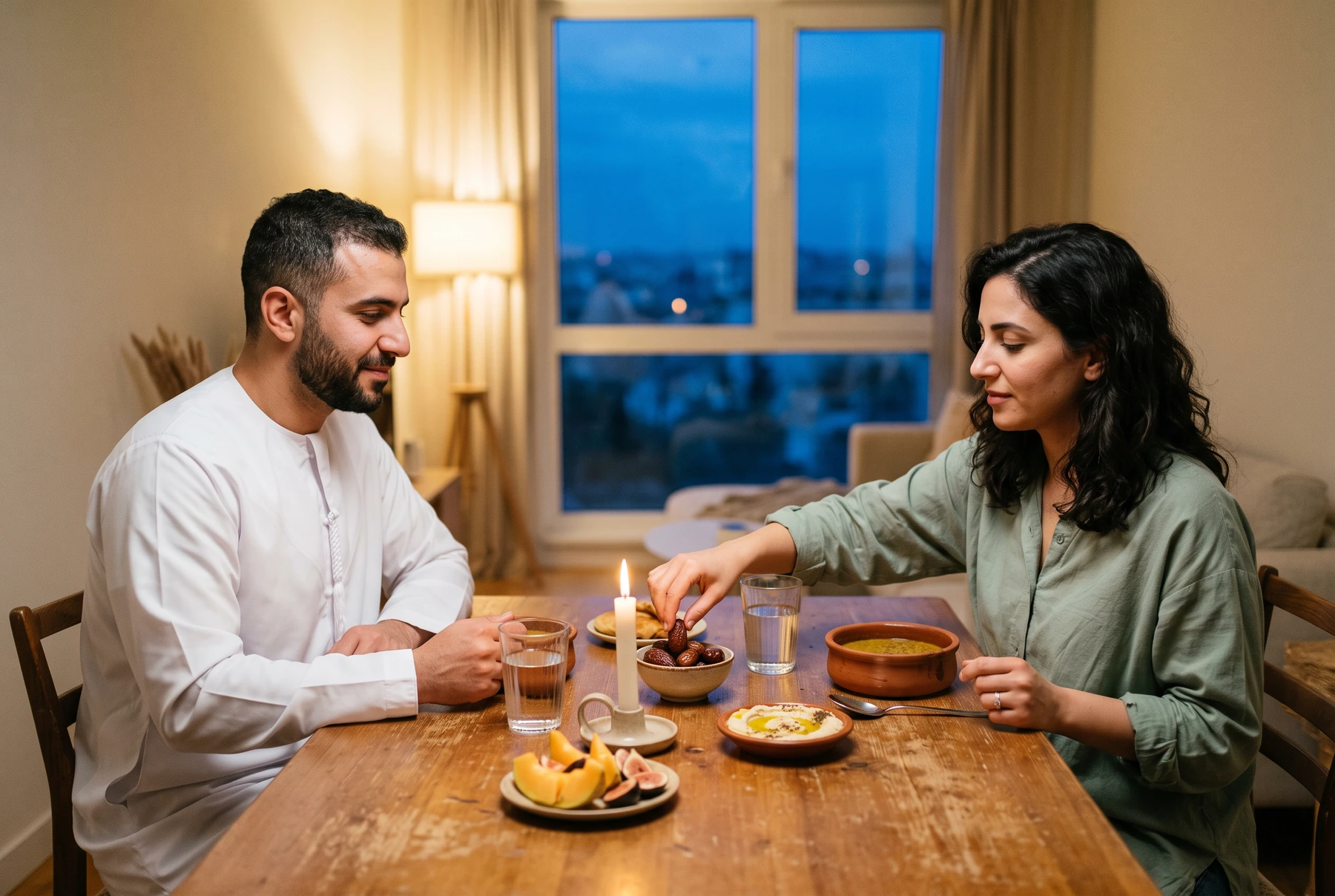
The traditional way — dates and water, then a pause for prayer, then the meal — is almost ideal for a slowed stomach. A couple of dates and a glass of water, ten or twenty minutes, and then a small plate are what the clinical advice would suggest anyway. The thing to avoid is the full iftar spread eaten at once after thirteen hours without food. A GLP-1 stomach cannot take it and will say so.
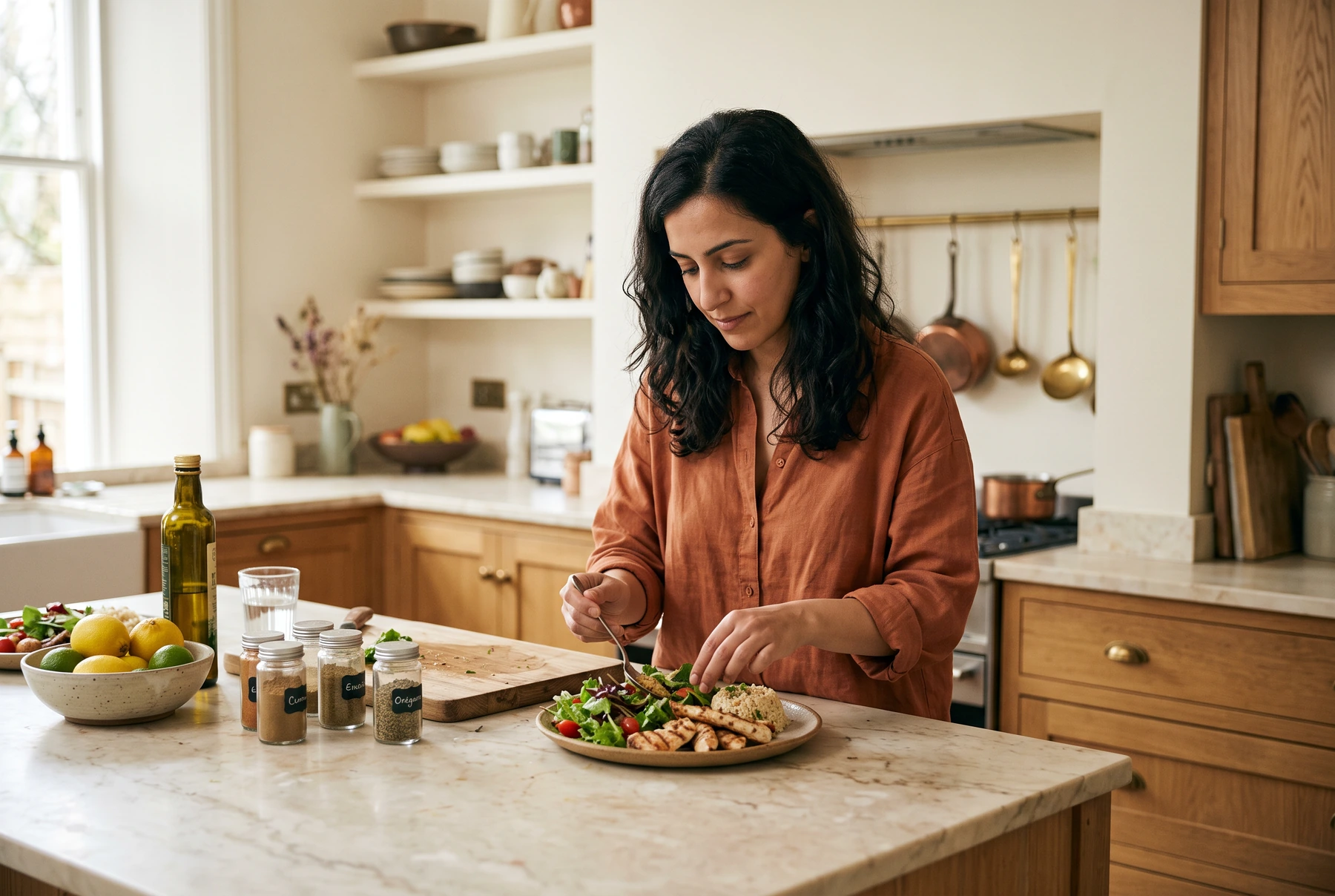
At the meal: protein first — grilled meat, fish, dal, chana, eggs — then vegetables, then a small portion of rice or bread. Fried items like pakora and samosa are the most likely to cause nausea and are better as a taste than a course. Fruit and a small sweet after, not before. Eat slowly, stop when full, and expect to want less than the people around you. Our full guide to eating on a GLP-1 goes through the dishes in more detail.
Suhoor matters more than people think. Something with protein and fiber — eggs, yogurt, lentils, oats — eaten slowly, plus water, sets up the day. Skipping suhoor on a GLP-1 tends to mean a worse afternoon, not a better one.
Who should not fast on a GLP-1
The IDF-DAR framework has risk categories, and Islamic law has an exemption for illness. The two line up reasonably well. People who should talk to a clinician before deciding to fast, and may be advised against it: anyone who started a GLP-1 or stepped up a dose within the last four weeks; anyone currently experiencing repeated vomiting; anyone with diabetes who is on insulin or a sulfonylurea alongside the GLP-1; anyone who has had pancreatitis, severe dehydration, or a hospital admission in the last year; and anyone who is pregnant or breastfeeding, which is a separate conversation covered in our article on GLP-1s, contraception, and pregnancy.
Not fasting on medical advice is not failing. Making up the days later, or giving fidya where that applies, is the provision the exemption exists to allow. Your scholar can advise on that part; your clinician on the first part.
When to talk to a clinician
Before Ramadan, if you take any diabetes medication alongside your GLP-1, if you are mid-titration, or if you are planning a dose change in the next two months. During Ramadan, if you vomit repeatedly, cannot keep fluids down, feel faint or confused, or have severe abdominal pain — in which case break the fast first and call second. At Maro, your fasting plans can be noted in the written intake so the dose schedule is built around the calendar from the start, and the GLP-1 page explains how follow-up works during treatment.
Frequently asked questions
Can I take Ozempic, Wegovy, or Mounjaro while fasting for Ramadan?
For most people, yes. Semaglutide and tirzepatide are once-weekly injections that work whether or not you eat, and the IDF-DAR guidelines list GLP-1 medications as needing no dose change during Ramadan once titration is complete. Do not stop the medication for the month without talking to a clinician, and do not start or increase a dose during it.
Does a semaglutide or tirzepatide injection break the fast?
The IDF-DAR guidelines state that subcutaneous injections such as insulin do not break the Ramadan fast, and GLP-1 injections are given the same way with no nutritional content. Rulings vary between scholars; if yours differs, the weekly schedule makes it easy to inject after iftar instead.
Is semaglutide halal?
That is a ruling for a scholar. What the FDA label says is that semaglutide's peptide backbone is made by yeast fermentation and the branded Wegovy pen's inactive ingredients are disodium phosphate, sodium chloride, and water — no animal-derived ingredients are listed. Multi-dose tirzepatide presentations and many compounded vials contain a preservative such as benzyl alcohol, so ask the pharmacy for the ingredient list of the product you receive and take it to your scholar.
When should I inject my weekly dose during Ramadan?
Any time of day works per the labels. Many people inject after iftar so any nausea falls after the fast is broken; some inject before suhoor. Pick one pattern and keep the same day each week. Do not begin or step up a dose in the first weeks of Ramadan — titrate at least four weeks before.
Will a GLP-1 cause low blood sugar while fasting?
On its own, rarely. GLP-1s lower blood sugar in a glucose-dependent way, so the risk during a fast is low, and the Ramadan trials found fewer hypoglycemic episodes on GLP-1s than on sulfonylureas. The risk rises if you also take insulin or a sulfonylurea; that combination needs a clinician's plan before Ramadan. For most people the bigger risk is dehydration from vomiting.
Researched and written by The Maro Care Team and reviewed by a licensed physician through our clinical partner network. Maro provides telehealth care for men and women across GLP-1 weight loss and performance, plus hair loss and ED treatment for men. Last reviewed: October 2026.