Quick answer.
No food is off-limits on semaglutide or tirzepatide, but a few predictably cause trouble: high-fat and fried foods, large portions, very spicy dishes during dose increases, fizzy drinks, alcohol, and sugary foods on an empty stomach. The fix is mostly about size and timing — smaller plates, eaten slowly, stopping when full, with protein first and enough water. Most of the nausea people blame on the medication is the medication plus the meal.
The reason is mechanical: GLP-1s slow stomach emptying, and in the Wegovy trials 44 percent of adults reported nausea, 30 percent diarrhea, and 24 percent constipation per the FDA label. The dietary advice below follows the clinical-practice recommendations published by Wharton and colleagues in 2022. If you have not started yet, the GLP-1 cost calculator is a reasonable first stop.
| Harder on a GLP-1 | Why | Easier swap |
|---|---|---|
| Fried and high-fat foods (pakora, samosa, fried falafel, wings, creamy sauces) | Fat sits longest in a slowed stomach; most-cited nausea trigger | Grilled, baked, or tandoori versions; air-fried at home |
| Large portions, especially rice- or bread-heavy | Volume plus slow emptying = fullness that turns to nausea | Half the usual plate; protein and vegetables first, rice last |
| Very spicy dishes during a dose increase | Irritates a stomach already adjusting | Keep the spice, lower the heat for 2–3 weeks after each step up |
| Fizzy drinks and beer | Gas on top of fullness; bloating and belching | Still water, unsweetened tea, diluted juice |
| Sugary foods on an empty stomach (mithai, baklava, pastries, sweet lassi) | Fast sugar can trigger nausea and energy crashes when appetite is low | A small portion after a protein-based meal |
| Alcohol | Worsens nausea and reflux; adds calories without nutrition | Limit, especially in the first months and around escalation |
Around the second week, most people on a GLP-1 discover a food that used to be fine and no longer is. For some it is the Friday biryani. For others it is a plate of wings, a second samosa, or a milky tea with three sugars at four in the afternoon. The food did not change. The stomach did.
This is a practical guide to what tends to go wrong, which foods are the usual culprits, what to eat instead, and — because a lot of the people reading this grew up on a different table than the one most GLP-1 diet lists assume — a section on South Asian and Middle Eastern plates specifically. It applies equally to semaglutide (Ozempic, Wegovy, compounded) and tirzepatide (Mounjaro, Zepbound, compounded), for men and for women.
One framing before the lists. The goal is not restriction. The medication is already doing the restricting. The goal is to stop the meals that are making you feel sick, so you can keep eating well enough to hold onto muscle and keep taking the medication.
Why food hits different on a GLP-1
Semaglutide and tirzepatide slow the rate at which your stomach empties into the small intestine. That is part of how they reduce appetite, and it is also why a meal that used to clear in two hours can sit for four. Add the direct effect on appetite signaling and you get a stomach that is both slower and more sensitive, especially in the weeks after each dose increase.
The trial numbers are not small. On Wegovy, 44 percent of adults reported nausea at some point, 30 percent diarrhea, 24 percent vomiting, 24 percent constipation, and 20 percent abdominal pain. The Zepbound label reports gastrointestinal side effects in 56 percent of people on the medication versus 30 percent on placebo. Most of it is mild and most of it fades, but what you eat during those weeks changes how bad it gets.
The foods most likely to cause trouble
The 2022 clinical-practice recommendations from Wharton and colleagues, written for clinicians prescribing GLP-1s for obesity, put the dietary advice simply: eat smaller volumes, stop when full, do not eat when not hungry, avoid high-fat or spicy foods during dose escalation, go easy on alcohol and fizzy drinks, and drink enough water. The authors are honest that most of this comes from clinical experience rather than trials. It also matches what patients report, consistently.
High-fat food is the big one. Fat is the slowest macronutrient to leave the stomach under normal conditions; on a GLP-1 it lingers longer still, and that is the meal that comes back up. Fried food is the worst version of it. Large portions are second — not because of any ingredient, but because a stomach that is already slow and already signaling fullness does not have anywhere to put a second helping. Very spicy food is a problem mainly in the two or three weeks after a dose increase. Carbonation adds gas to fullness. Sugar on an empty stomach, when your appetite is low and you have not eaten in hours, tends to produce nausea and a crash rather than energy. Alcohol makes nausea and reflux worse and is easy to overdo when food intake is low.
Desi and Middle Eastern plates: what to adjust
Most GLP-1 diet advice online assumes a plate of chicken breast, rice, and broccoli. If your table is dal, roti, biryani, kebab, hummus, and chai, the principles are the same but the specifics are different, and they are worth spelling out.
The dishes that tend to cause the most trouble are the fried and ghee-heavy ones: pakora, samosa, puri, parathas cooked in a lot of ghee, fried falafel, and anything in a cream-based gravy. Biryani and pulao are not the problem on their own — the portion is. A full plate of rice is exactly the kind of volume a slowed stomach rejects. Mithai, baklava, gulab jamun, and kunafa on an empty stomach after a long gap, or a sweet milky chai in the afternoon, are the sugar-on-empty pattern.
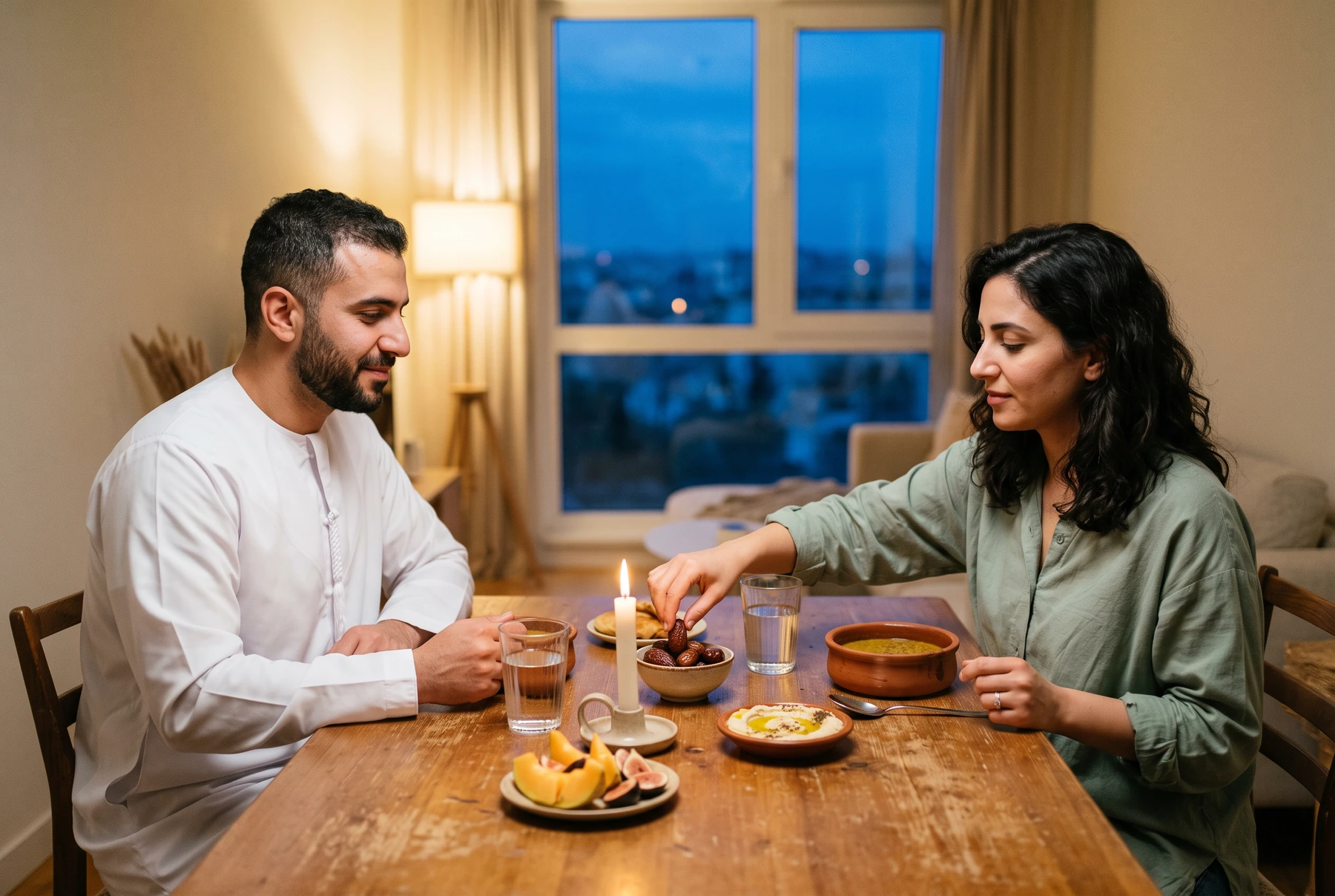
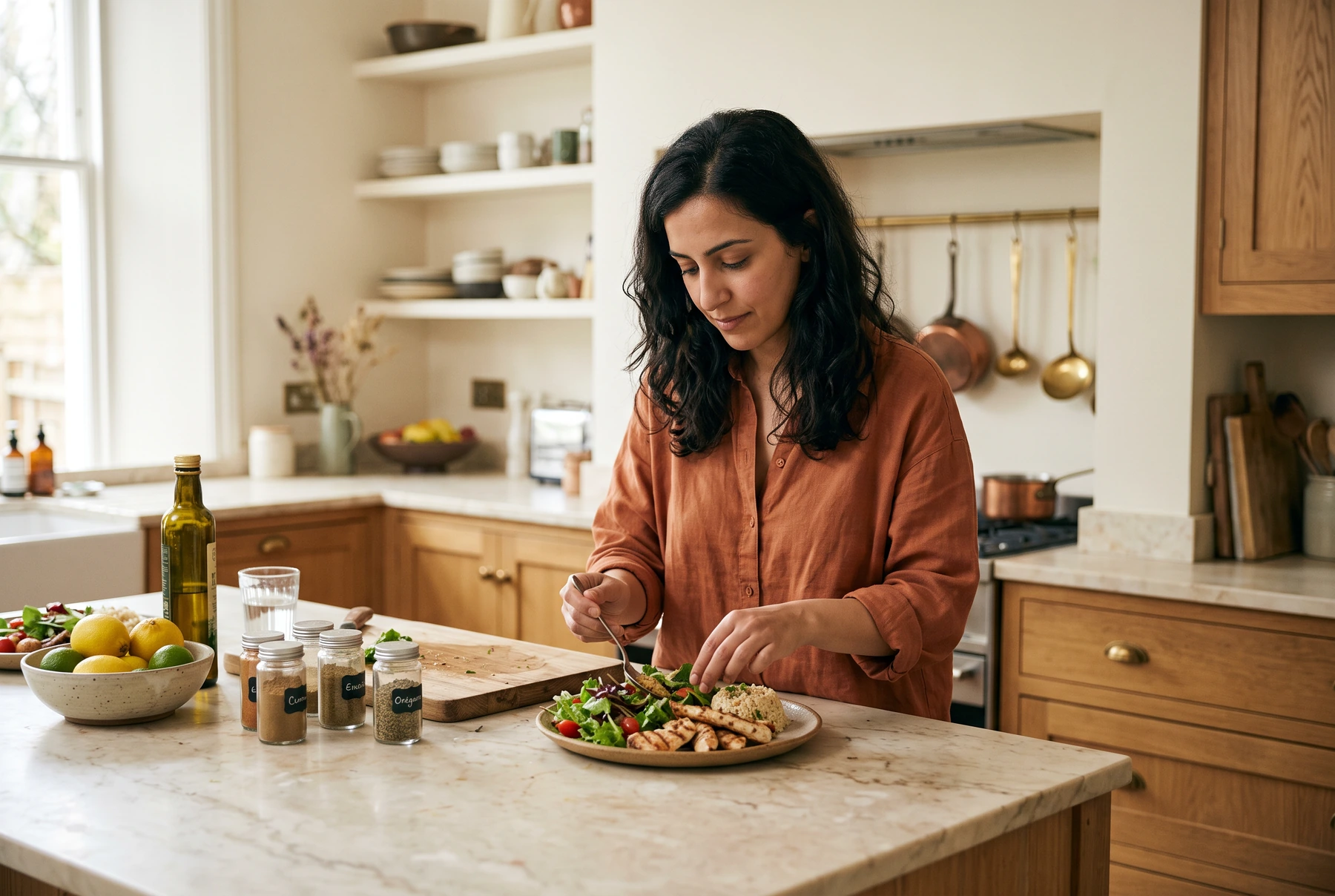
What tends to work: dal, chana, and lentil soups are protein-dense, gentle, and filling in small amounts. Grilled and tandoori meat, shish kebab, and grilled fish are the protein-first choices that do not sit heavily. Hummus, labneh, grilled vegetables, tabbouleh, and raita are good at making a plate feel complete without volume. Roti and naan without butter in place of paratha. A quarter plate of rice instead of half. Chai with less milk and less sugar, or after a meal rather than instead of one. Dates are fine — two, not eight, and ideally with water and protein, which matters especially during Ramadan.
None of this is cultural advice. It is the same fat, volume, and sugar logic applied to a different kitchen.
Protein first, and why it matters more than usual
When appetite drops, protein is the first thing people stop eating enough of, and it is the thing the body needs most during weight loss. Losing weight quickly without enough protein and resistance training means losing muscle alongside fat. The trial data on this are discussed in our tirzepatide vs semaglutide comparison; the practical answer is to eat the protein on the plate before the rice, every meal, and to treat it as the one food you do not skip when you are not hungry.
Rapid weight loss is also the usual reason for the hair shedding some people see a few months in. Our article on tirzepatide and hair loss explains why that is almost always temporary and why protein intake is part of the answer there too.
Constipation: the side effect nobody mentions at dinner
A quarter of adults on Wegovy reported it. Slower gut transit plus less food volume plus less water is a reliable recipe. The clinical recommendation is unglamorous: more fiber, more water, and a stool softener if needed. In practice that means vegetables and lentils rather than white rice as the bulk of the plate, and a water bottle you actually finish. Because you are eating less, you are probably also drinking less without noticing. That is the usual cause.
Find out if this is right for you.
The Maro intake takes about five minutes. A licensed physician reviews your case before any prescription is issued — no rubber stamps.
Start My Free VisitEating out and social meals
Restaurant plates are built for a different stomach. Order what you would normally order and plan to take half home, or order a starter as the main. Eat slowly — slower than feels natural — because the fullness signal arrives late on a GLP-1 and the meal you finished in fifteen minutes will keep arriving for an hour. Skip the fizzy drink. Be cautious with alcohol: on a mostly empty stomach it hits harder and it worsens the nausea you are trying to avoid.
At family meals, particularly ones where refusing food is complicated, a small first plate with visible protein, eaten slowly, tends to avoid the second-helping conversation entirely. Nobody notices a slow eater.
When nausea is more than nausea
Mild nausea in the first weeks and after each dose increase is expected and usually fades. Vomiting that is repeated, that keeps you from holding down fluids, or that comes with dizziness, confusion, or unusual fatigue is a different situation — the clinical guidance treats that as needing prompt care, because dehydration on a GLP-1 can escalate. Severe or persistent abdominal pain, especially pain that spreads to the back, needs same-day evaluation; the labels for both medications warn about pancreatitis and gallbladder problems, and those are not food issues.
When to talk to a clinician
Talk to a clinician if nausea is not improving several weeks after a dose increase, if you are vomiting repeatedly, if you cannot keep fluids down, if you have severe abdominal pain, or if you are losing weight faster than you and your prescriber planned and struggling to eat enough protein. The label allows a clinician to delay a dose escalation by four weeks when the current dose is not well tolerated — that is a normal adjustment, not a failure. At Maro, side effects and tolerability are part of the follow-up after the intake, and the GLP-1 page explains how dose changes are handled.
Frequently asked questions
What foods should you avoid on Ozempic or Wegovy?
No food is forbidden, but high-fat and fried foods, large portions, very spicy dishes during dose increases, fizzy drinks, alcohol, and sugary foods on an empty stomach are the most common triggers for nausea, reflux, and bloating. Smaller plates eaten slowly, with protein first, prevent most of it.
Why does fatty food make me nauseous on a GLP-1?
Fat is the slowest food to leave the stomach, and GLP-1s slow stomach emptying further. A fatty or fried meal can sit for hours in a stomach that is already signaling fullness, which is the usual path to nausea or vomiting. Grilled, baked, or tandoori versions of the same dish tend to be tolerated far better.
Can I eat rice, roti, and biryani on semaglutide or tirzepatide?
Yes. The issue is portion, not the food. A full plate of rice is the kind of volume a slowed stomach rejects; a quarter plate after protein and vegetables usually is not. Roti or naan without added butter tends to sit more easily than ghee-heavy paratha.
Can I drink alcohol on a GLP-1?
Occasionally, with care. Alcohol worsens nausea and reflux, hits harder when you have eaten little, and adds calories without nutrition. The clinical recommendation is to moderate it, especially in the first months and around dose increases, and to avoid it entirely when nausea is already present.
How do I deal with constipation on Ozempic or tirzepatide?
More fiber, more water, and a stool softener if needed — that is the standard clinical advice. Lentils and vegetables as the bulk of the plate instead of white rice, and a water bottle you actually finish each day, cover most cases. Because you are eating less, you are probably drinking less without noticing.
Researched and written by The Maro Care Team and reviewed by a licensed physician through our clinical partner network. Maro provides telehealth care for men and women across GLP-1 weight loss and performance, plus hair loss and ED treatment for men. Last reviewed: October 2026.